



General
Google's November 2026 Core Update: An eCommerce SEO Checklist
Meghna Vinod|Nov 12, 2026|Read 8 Min



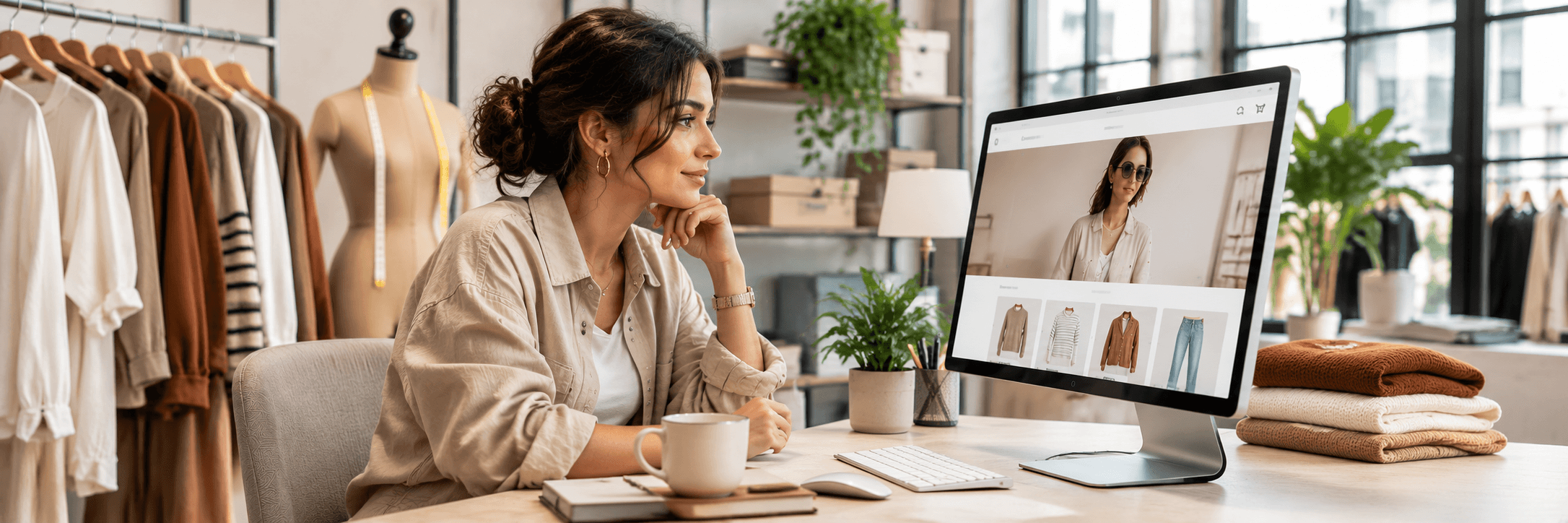
Apparel brands in the US and around the world operate in a demanding environment. Every style of clothing comes in several different sizes and colors. Now, with fast fashion and quick eCommerce, people are buying significantly more clothes than at any point in our history. The Internet plays a major part in this too, as it allows people to discover a new item and place an order from their mobile within minutes.
For brands planning to start an apparel brand and sell online, this might be the best time ever. That being said, it is important to decide the budget wisely. An average apparel eCommerce website costs anywhere from $5,000 to $500,000. The deciding factor is whether you’re planning a small template-led launch, custom mid-market build, or a multi-store enterprise build.
Template-led launch: around $5,000 to $25,000. You get a high-quality theme and app stack, with clean product data. Great for a new label looking to get their limited range up and selling quickly. The store looks great; however, you are limited by what you can do in terms of layout and logic with your theme.
Custom mid-market build: around $25,000 to $150,000. Custom theme, ERP and inventory synchronization, multi-currency sales, and advanced merchandising. This tier is suitable for brands with a high number of SKUs or multiple markets. The additional cost gives you a store that is built specifically for your business.
Enterprise build: around $150,000 and above. Ideal for setting up multiple stores, regional pricing, headless front-ends, and in-depth system integration, this tier is perfect for businesses that want to sell across multiple regions from one back office.
Note: Most cost guides for 2026 will give you a range around these figures. Your final quote will depend on how big your catalog is and how many integrations you have.
Variety of sizes and colours is a key part of any clothing eCommerce store. Size guides and fit finders can be included to help, and this cost can be offset by reducing return rates. According to NRF and Happy Returns, US retailers expected 19.3% of online sales to be returned in 2025. Coresight Research found that online apparel had a higher return rate of 24.4% in 2023. Every return avoided means that you save the return label, and the product will likely be discounted.
Guest checkout and wallet payments look like small line items. According to Baymard Institute, the average documented cart abandonment rate is 70.22%. In its survey, 40% of shoppers cited extra costs that were too high, and 18% cited forced account creation. Baymard also estimates that the average large eCommerce site could gain 35.26% in conversion from checkout design improvements alone. Checkout work is one of the most direct ways to recover sales you already paid to attract.
Fashion catalogs are image-heavy, and heavy pages lose mobile shoppers. A study by Deloitte for Google found that a 0.1 second improvement in mobile site speed lifted retail conversions by 8.4% and average order value by 9.2%. Budget for image optimization and lean theme code, and audit each app before it adds scripts to your product pages. Once your mobile site is fast, a mobile app is the next step for brands with loyal repeat buyers.
An app can load product pages even faster and notify shoppers the moment a drop goes live. It adds cost, so it makes less sense for a label still building its audience. Our mobile commerce services cover app builds and faster mobile storefronts.
Filter by stock to ensure customers can view available sizes. Collection pages that are part of your campaign will help to keep your landing pages up to date. Also, with good merchandising tools, your team can easily start a drop without waiting for a developer. This is very important to do in this category, as all collections are seasonal.
If you are selling internationally, you will have multiple currencies and local payment options. At checkout, you can calculate duty and taxes. This is the most useful of the features as it shows the customer the total landed cost and will prevent any unexpected costs that cause customers to exit.
Synchronizing your ERP and order management system will ensure your stock levels are always correct, meaning you never oversell a size that you don’t have. Product information is kept consistent across all your new styles (hundreds per season) with a PIM system.
Fashion relies on imagery; therefore, allocate funds towards professional photos of your model and videos of your products. This cost isn’t included in the development quotes, which is why companies exceed their budgets. Imagery serves the purpose of fit tools in a sense that customers will understand how a piece fits by seeing its movement.
Shopify Plus and Adobe Commerce both run successful apparel brands. The right fit depends on how your business operates.
Shopify Plus suits direct-to-consumer brands that want to move fast. Shopify lists the plan at $2,300 per month, and most of the build budget goes to design and integrations, while apps add recurring fees. Your marketing team can edit pages and launch drops without waiting on developers, which matters when apparel revenue follows seasonal timing. It works well when your catalog logic is standard and speed to market is the priority.
Codilar is a Shopify Plus partner, and we also built Store Decode, a Shopify app that shows which homepage sections earn clicks and orders. Our Shopify Plus development services cover the full build.
Adobe Commerce is ideal for those who have complex businesses. It works on a licensing model that requires quotes, and the development involves a greater upfront cost due to the increased amount of business logic built into the system. This is advantageous if you operate storefronts in different locations, with different currencies, have catalogs, do wholesale along with retail through company accounts, and have price tiers. One codebase serves all those storefronts.
Either platform can run headless if you want a fully custom front end. Our headless eCommerce development adds design and engineering cost, and it gives you full control over storefront speed and experience.
For those who are moving to a new eCommerce platform from an existing one, migration has to be taken into account when estimating costs. Product and order information should be transferred, and URL redirection is required in order to retain your rankings.
Failing to plan the redirects could mean losing your organic traffic once the project goes live. Our SEO professionals will be able to link each of your old URLs to a new one and monitor rankings once the project is launched.
Platform fees and transaction charges repeat each month, and in-app subscription fees add to these expenses. The majority of clothing stores also offer return and review facilities. There will also be a need for load testing and developer working hours before the high periods due to seasonal discounts. You therefore need to budget for a support retainer. The managed service company will cover all of these.
Begin by planning how many products you have and how many markets you are selling into. Then list any systems you need to integrate with. This can often impact the final quote. Start with a basic system and then add more advanced features when you have sales data to show what will be useful.
Codilar can help you work through each of these steps. With 11+ years of experience, we are an Adobe Commerce Gold Solution Partner and have delivered 500+ Adobe Commerce stores and also built on Shopify Plus, so we can recommend the platform that suits your plan. Share your catalog and the systems you use, and our D2C eCommerce team will scope a clothing store around them.
A clothing eCommerce website can cost anywhere from $5,000 to $500,000 or more, depending on the complexity of the build. A template-led Shopify store is suitable for new brands, while businesses requiring custom functionality, multiple storefronts, and system integrations need a larger budget. Also, account for platform fees, apps, and ongoing maintenance.
A pre-built Shopify theme is a cost-effective choice for new clothing brands with standard requirements. Custom development makes more sense when you need advanced product filters, unique shopping experiences, custom checkout logic, or complex integrations. Evaluate your requirements before investing in a custom build.
Provide detailed size charts with actual garment measurements, model measurements, and fit descriptions. Product videos and size recommendation tools can also help customers make better purchasing decisions. A straightforward exchange process can further improve the shopping experience and reduce avoidable returns.
Integrating your eCommerce platform with an ERP or inventory management system helps synchronize stock levels across sales channels. For clothing brands, inventory should be tracked by size and color to prevent overselling. Codilar can help integrate these systems to improve inventory visibility and order management.
Plan the migration of product data, size and color variants, customer accounts, order history, and existing integrations. Map old URLs to their corresponding new pages using 301 redirects to protect organic search visibility. Test checkout, inventory, payment, and shipping workflows before going live.

Get tailored technology solutions to scale your retail business online
Request A Quote

Stay ahead with insights, trends, and brand success stories from the world of Digital Commerce.


With the world's leading digital commerce agency.