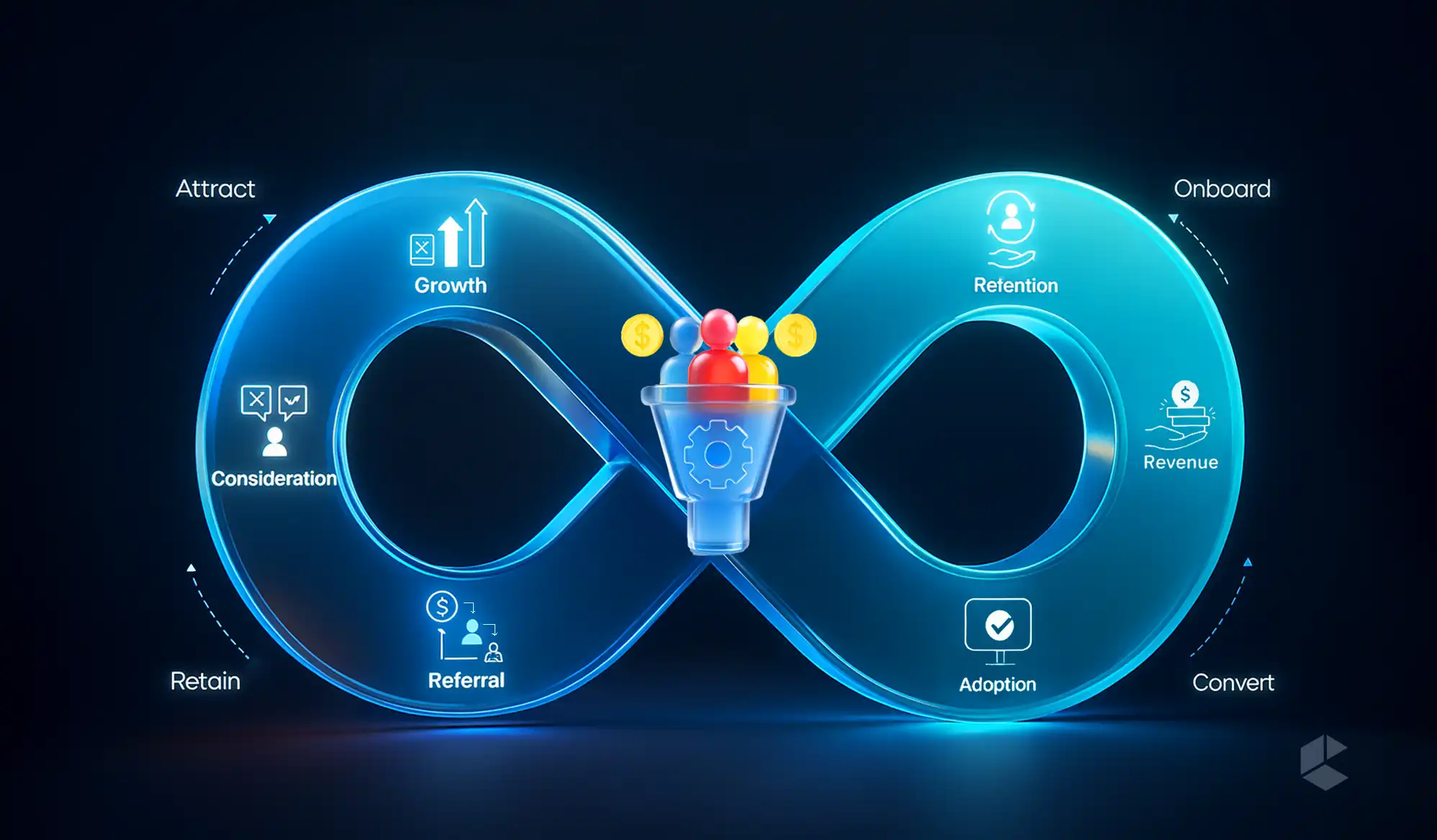
- Lifecycle stages guide targeted communication effectively.
- Personalization increases engagement and customer response.
- Automation ensures timely, consistent lifecycle workflows.
- Retention programs encourage repeat buying behaviors.
- Advocacy campaigns turn loyal customers into promoters.
- Data-driven optimizations strengthen performance over time.
If you are still treating your audience like one big blob that gets the same message at the same time, you are not doing marketing. You are doing announcements.
Lifecycle marketing fixes that.
Instead of shouting the same offer at everyone, it lines up your messages with where people actually are in their journey. That shift is exactly where better conversion rates and higher customer revenue come from.
In this article, we will look at how lifecycle marketing works, how it connects directly to CRO, and how each stage of the customer journey can be used to drive more revenue from the same audience you already have.
What is Lifecycle Marketing in Plain Terms?
Lifecycle marketing is a strategy where you target people based on the stage of their relationship with your brand. The idea is very simple:
Right person. Right message. Right time.
The reference framework breaks the customer lifecycle into clear stages:
- Awareness
- Consideration
- Purchase
- Retention
- Advocacy
At each stage, you use data and behavior to segment customers and send personalized marketing messages that match what they are trying to do in that moment. So instead of pushing random promotions, you are building a journey that feels logical and helpful.
This is where CRO quietly slips in. When your messages match intent and timing, conversion rates improve across:
- Ad clicks
- Email engagement
- Landing page actions
- Purchases
- Repeat purchases
Lifecycle marketing is basically CRO with a long memory. Instead of optimizing single touchpoints in isolation, it optimizes the full journey.
Why Lifecycle Marketing Naturally Lifts CRO and Revenue
The reference blog lists several key benefits of lifecycle marketing that tie directly into conversion and revenue:
1. Better Customer Retention
Retention is not only about keeping people around. It is about extending the number of times they convert.
Lifecycle marketing supports retention through:
- Relevant content and offers after the first purchase
- Loyalty programs that reward repeat buying
- Referral programs that invite them to bring more customers
When customers stay with you longer, every retention touchpoint becomes a new opportunity to convert again. That is a direct lift on customer revenue and total conversions per user.
2. Stronger Customer Engagement
The guide emphasizes personalized messages as a core benefit. Engaged customers are more likely to:
- Open emails
- Click through campaigns
- Read content
- Share reviews and experiences
More engagement means more opportunities to get someone from “interested” to “action taken.” That is the heart of conversion rate optimization. You are not just optimizing a button or layout; you are optimizing the relationship.
3. Increased Revenue from the Same Audience
The blog explicitly calls out increased revenue as a key outcome of lifecycle marketing. It does this in a few ways:
- Turning potential customers into paying customers
- Turning one-time buyers into repeat buyers
- Turning loyal buyers into advocates who bring in new customers
Instead of constantly paying to reach cold audiences, lifecycle marketing pushes more value out of the people you have already acquired. The CRO win here is simple: more conversions per acquired user, at lower marginal cost.
4. Data Led Decisions and Continuous Optimization
The article stresses the role of data and ongoing analysis. You track:
- Open rates
- Click-through rates
- Conversion rates
Then you adjust your campaigns and messaging. That is classic CRO thinking, but applied to the whole lifecycle instead of just one funnel step. Over time, those improvements compound into real revenue gains.
5. Automation That Protects Consistency
Marketing automation shows up in the reference as a core pillar. Automated workflows:
- Trigger emails at the right moments
- Keep follow-ups consistent
- Free your team to focus on strategy, not repetitive sending
For CRO, automation means you do not miss critical micro moments like cart abandonment, trial ending, or first purchase follow-up. Those automated touchpoints often have some of the strongest conversion rates in your entire program.
Stage by Stage: How Lifecycle Marketing Drives Conversions
Let us walk through each lifecycle stage from the reference and tie it directly to CRO and revenue.
1. Awareness Stage: Bringing in Higher Quality Prospects
In the awareness stage, your main job is to get noticed by the right people. The blog points to:
- Social media marketing with targeted ads and engaging posts
- Content marketing through blogs, videos, and articles
- Email marketing with welcome flows and introductory content
There is a key data point in the article: companies that keep an active blog generate around 67 percent more leads than those that do not update their blog regularly. That is a huge signal for CRO at the top of the funnel. You are not just capturing more eyeballs; you are capturing more potential conversions.
Awareness work in lifecycle marketing is not random reach. It is designed to:
- Attract people who actually fit your target audience
- Warm them up with useful content
- Push them toward subscribing or following
That means when you later ask for a purchase, you are selling to people who already understand your brand and value.
2. Consideration Stage: Reducing Friction and Doubt
In the consideration stage, people are comparing options and trying to decide whether you are worth their money.
The reference suggests tactics like:
- Targeted emails with detailed info, case studies, and testimonials
- Deep content such as guides, comparison charts, and FAQs
- Social proof with reviews and ratings
The article mentions that almost half of buyers read at least three to five pieces of content during consideration, and that a very large majority of consumers read online reviews before purchasing. That tells you exactly where CRO should focus:
- Make product comparisons easy to find
- Make reviews visible and credible
- Make helpful content part of your lifecycle flow, not just a random blog section
If you send a prospect an email that links directly to a clear comparison page, a guide that answers their objections, and real customer reviews, you are actively lifting the conversion rate of that stage.
3. Purchase Stage: Smoothing the Last Mile
At the purchase stage, the reference article highlights three big elements:
- Personalized emails, such as order confirmations with recommendations
- Marketing automation to send follow-ups and status updates
- Incentives such as discounts, free shipping, or limited-time offers
The blog quotes a powerful email marketing stat: every dollar invested in email can return an average of 44 dollars. That is not just about open rates; it is about conversion.
Lifecycle marketing boosts CRO at this stage by:
- Making the purchase feel safe and clear
- Reducing anxiety with confirmation and updates
- Adding just enough incentive to make “buy now” more appealing than “think about it later”
This is where small optimizations are multiplied by lifecycle logic. A well-timed discount email to an engaged prospect will convert better than the same discount thrown at a cold audience.
4. Retention Stage: Turning One Conversion into Many
The reference blog treats retention as a dedicated stage with its own strategy, not an afterthought.
Core elements include:
- Loyalty programs that reward repeat buying with points and perks
- Referral programs that reward customers for bringing others
- Ongoing engaging content like newsletters and personalized offers
From a CRO and revenue perspective, this stage does two important things:
- Increases the number of times a customer buys
- Increases the likelihood that they respond to new campaigns
When someone knows that each purchase earns them points, or that referring a friend gives both of them a benefit, they have more reasons to engage. That leads to higher conversion rates on future promotions and a longer revenue curve per customer.
5. Advocacy Stage: Multiplying Conversions Through Customers
Advocacy is where satisfied customers turn into a growth channel.
The article focuses on:
- Customer testimonials
- Referral programs
- Social media sharing and tagging
This stage may not look like classic CRO, but it absolutely is. When a new prospect discovers you through a real customer story, a review, or a referral from a friend, they are much more likely to convert.
Lifecycle marketing deliberately encourages this behavior:
- Asking for reviews at the right time
- Featuring customer stories on site and social channels
- Incentivizing referrals with rewards
The result is a flow where one happy customer can eventually be responsible for several new conversions, without you paying extra to acquire them through ads.
Building a Lifecycle Marketing Strategy That Supports CRO
The reference blog outlines a clear four-part process for creating a lifecycle marketing strategy. Each of these directly influences your ability to improve conversion rates and grow revenue.
1. Understand the Customer Journey
You start by mapping how customers move from first touch to loyal buyer. This includes:
- Defining each lifecycle stage
- Tracking how people interact with your brand
- Identifying key touchpoints
That map shows you where people drop off and where they respond well. From a CRO angle, this is your blueprint for:
- Where to test new messages
- Where to add campaigns
- Where to reduce friction
If you see big drop-offs between consideration and purchase, you know you need better offers, better proof, or better follow-ups in that gap.
2. Segment Your Audience
The article stresses segmentation based on:
- Purchase history
- Engagement level
- Demographics and behavior
You then create personalized messaging for each segment and design lifecycle strategies around them.
Segmentation and CRO work together in a very obvious way: when your campaigns are based on behavior and relevance, conversion rates almost always outperform one-size-fits-all blasts.
Examples aligned with the reference:
- Highly engaged subscribers get deeper content and product comparisons
- New buyers get post-purchase recommendations and loyalty nudges
- Dormant customers get win-back messages
Same channel, different message, better conversion.
3. Implement Marketing Automation
Marketing automation is presented as a way to:
- Send timely and relevant emails
- Manage social media posts
- Track engagement consistently
- Free time for strategy and creativity
For CRO, automation does two crucial jobs:
- It guarantees a consistent follow-up that humans would forget
- It allows testing and learning at scale, because workflows are structured
You can, for example, create automated workflows for:
- Welcome series
- Abandoned carts
- Post-purchase follow-ups
- Loyalty reminders
Each workflow gives you opportunities to tweak subject lines, offers, calls to action, and timing based on performance metrics.
4. Analyze and Optimize
Finally, the reference article calls for continuous optimization using:
- Key performance indicators like open rate, click-through rate, and conversion rate
- Campaign analysis to understand what works
- Data-driven changes to improve results over time
This is where lifecycle marketing fully merges into CRO practice. You are not guessing. You are:
- Launching campaigns
- Measuring performance
- Iterating based on real data
Over time, each stage of the lifecycle gets sharper: better targeting, better offers, better timing. That compounding effect is what pushes up both CRO and customer revenue.
Lifecycle Campaign Types That Support Revenue Growth
The blog also breaks lifecycle marketing into campaign types. Each type serves a different conversion goal.
Awareness Campaigns
Goal: introduce the brand and build recognition.
Typical approach:
- Online ads based on interests and demographics
- Display and video content to highlight your unique value
These campaigns optimize for the first conversion steps, such as site visits and sign-ups. They feed the rest of the lifecycle with qualified traffic.
Engagement Campaigns
Goal: keep people interested and informed.
Example from the reference:
- Email newsletters with tips, insights, how-to content, industry news, and customer stories
Engagement campaigns do not always drive an immediate purchase. They warm up the audience, increasing the chance they convert when you later send a purchase or trial offer.
Conversion Campaigns
Goal: turn interest into a paying relationship.
The guide suggests:
- Limited-time discounts
- Free trials
- Clear calls to action on landing pages
These are your classic CRO playground campaigns. Here you fine-tune:
- Offers
- Headlines
- Buttons
- Page structure
But crucially, in lifecycle marketing, these campaigns hit people who have already been through awareness and engagement. So the baseline conversion rate is higher than if you only ran cold conversion ads.
Retention Campaigns
Goal: keep customers active and buying again.
The article points to:
- Loyalty programs with points and rewards
- Regular updates on balances and new rewards
- Exclusive experiences or offers
Retention campaigns push up metrics like repeat purchase rate and average revenue per user. Each successful retention step is another conversion that came from lifecycle thinking, not fresh acquisition.
Loyalty Campaigns
Goal: turn loyal customers into promoters.
As outlined:
- Referral bonuses for customers who bring in new buyers
- Discounts for referrers and new customers
- Featuring testimonials on site and social channels
Loyalty campaigns blend conversion and acquisition. When a referred prospect lands on your page already trusting you, their probability of converting is much higher than a cold visitor.
Conclusion
Lifecycle marketing works because it treats growth like a relationship instead of a series of disconnected tactics. When every stage has its own purpose, and every message feels like it belongs in that moment, customers move through the journey with far less hesitation. Over time, those smoother transitions stack up.
Prospects feel guided instead of pushed, buyers feel understood instead of chased, and loyal customers feel like they are part of something instead of just paying for something. That shift shows up directly in your numbers.
Better conversions, stronger repeat behavior, and a healthier revenue curve all come from a system that respects how people actually make decisions. In the end, lifecycle marketing is less about squeezing more from customers and more about creating a path that people naturally want to follow.
FAQs
Lifecycle marketing is a strategy where brands tailor messages to each stage of the customer journey, helping guide prospects smoothly from awareness to loyalty, improving conversions and long-term revenue.
It boosts conversions by sending messages that fit the customer’s intent and timing, reducing friction, strengthening engagement, and guiding users naturally toward taking action at every stage.
Personalization ensures customers receive messages relevant to their behavior and needs. This relevance increases engagement, encourages action, and leads to more efficient conversions across the entire customer journey.
Lifecycle marketing increases revenue by turning one-time buyers into repeat purchasers, improving customer retention, and motivating loyal customers to advocate or refer others through structured programs.
Automation platforms help trigger timely emails, track engagement, manage workflows, and maintain consistent communication, allowing teams to focus on strategy while customers receive relevant messages automatically.